

When I came back to chess after a break in my 30s, my rating was 2286. I’m now rated 2432 with a peak of 2450. What changed?
Well, I don’t think I became a stronger chess player, at least not by much. The chess ability I have was built when I was a kid. What I got better at was all the other things around the chess game: training properly, eating and sleeping well, handling losses, getting ready for the tournament. But if I had to pinpoint a single biggest factor, I’d say it was that I improved my time management.
Indulge me, if you will, in a little thought experiment. Imagine if chess time controls, rather than being for the whole game, were per move. So for example, instead of getting two hours for the whole game, say you got three minutes per move. How would this change how the game plays out?
It would essentially remove time management from the equation, because when you have three minutes per move, the strategy is obvious: You use the whole three minutes on each move.
The point of this thought experiment is to show just how big of a logistical headache the current system dumps in your lap. How you should use that two hours is far from obvious, and yet figuring out a good time management strategy and executing it will have a huge amount to say about how successful you are. In fact, I’d go as far as to say that time management is just as important for tournament success as being “good at chess.”
Let me give you an example. At one of the ALTO tournaments in Charlotte, I was playing against Sabina Foister, a 2300+ player and former US women’s champion. In short, a very well pedigreed and serious chess professional. Between moves 10 and 12, in a completely standard Queen’s Gambit Declined position, she spent 33 minutes, almost half her remaining time.
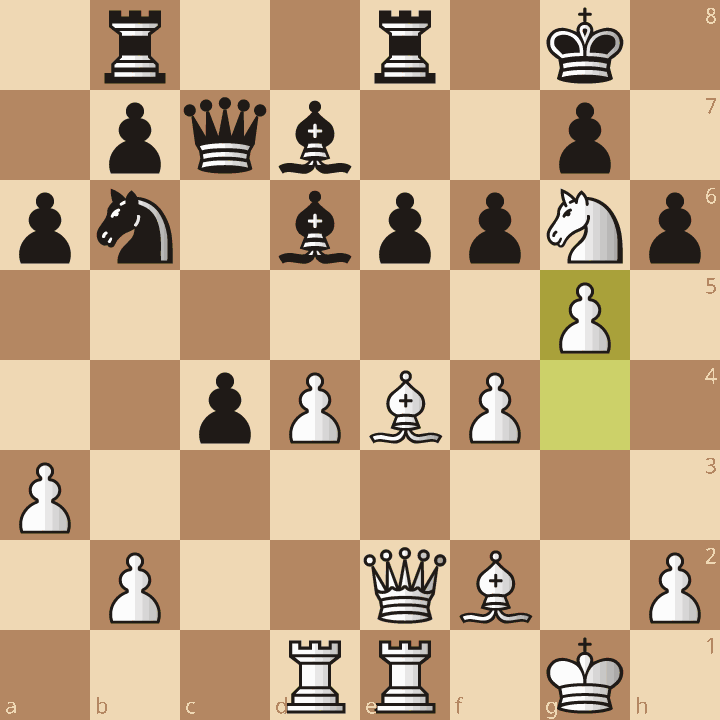
Fast forward 15 moves. I’ve misplayed the position and allowed it to become a complete mess. However, I’ve got one thing going for me: I still have a huge time advantage, 41 minutes to 9 minutes.
No doubt impacted by time pressure, she erred with 28…hxg5?? The opening of the h-file gave me a winning attack. After 28…f5, the position is a mess, but the engine prefers Black.
In one sense, she made a poor defensive move. But in a much more relevant sense, it was her time management in the opening that decided the game. So time management can be the source of a huge edge, even up to a professional level of chess.
Okay, hopefully I’ve convinced you of the importance of time management. But what you really want to know is how to solve your own time management problems, right? That’s what the rest of this post is all about.
